NexAIX-官方博客
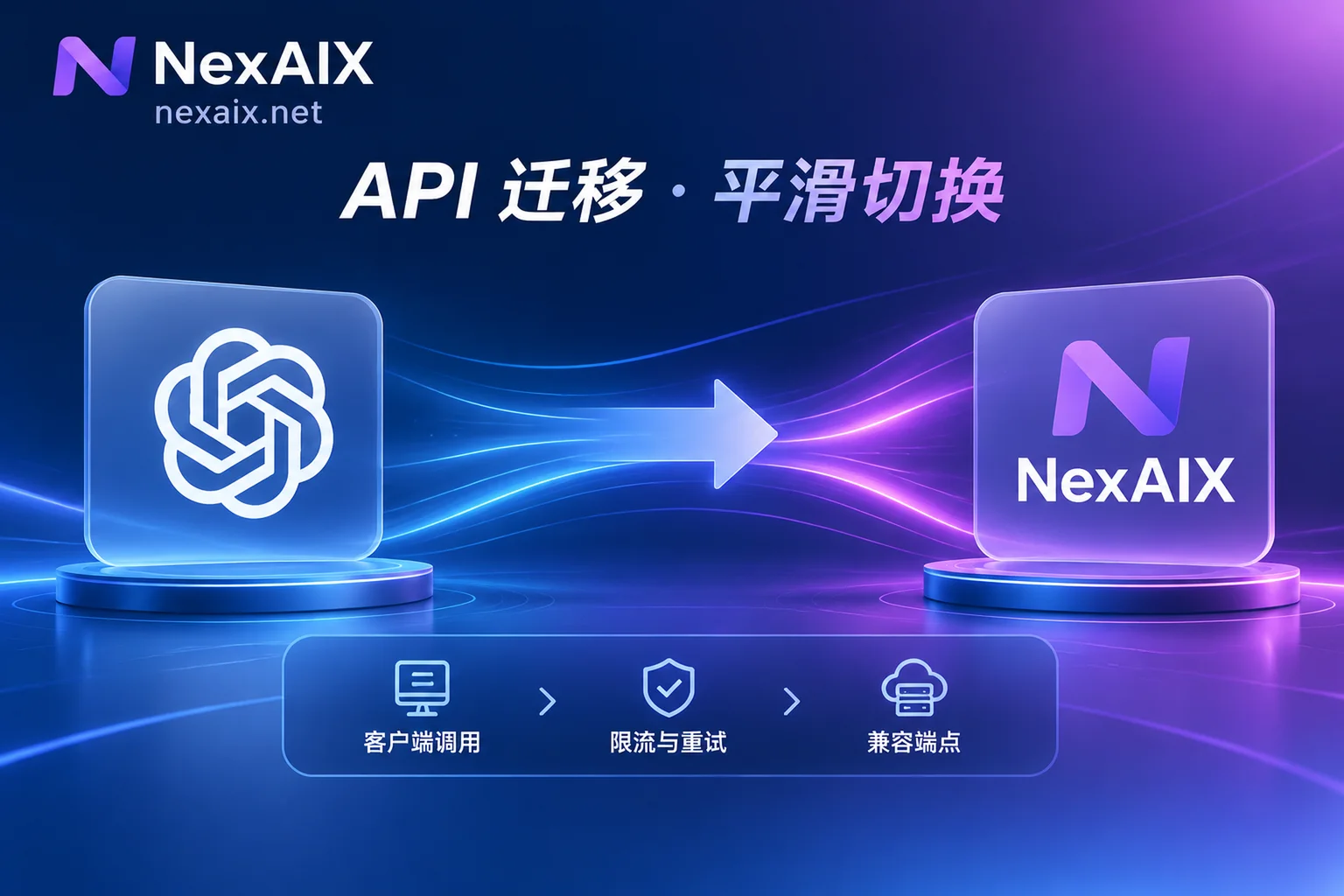
In today's AI development ecosystem, OpenAI API migration is no longer a "one-time action" but a routine need amid the accelerating pace of model iteration. Whether switching to a higher-performance closed-source model or introducing open-weight models for cost reduction and efficiency gains, developers often face protocol lock-in, implicit downgrades, compliance risks, and complex operational costs during migration.
How can you escape the anxiety of frequent code refactoring and smoothly switch your API foundation while ensuring business stability? NexAIX is becoming the choice of many production-grade Agent teams and technical leads.
Say Goodbye to "Migration Refactoring": A Unified OpenAI-Compatible Experience
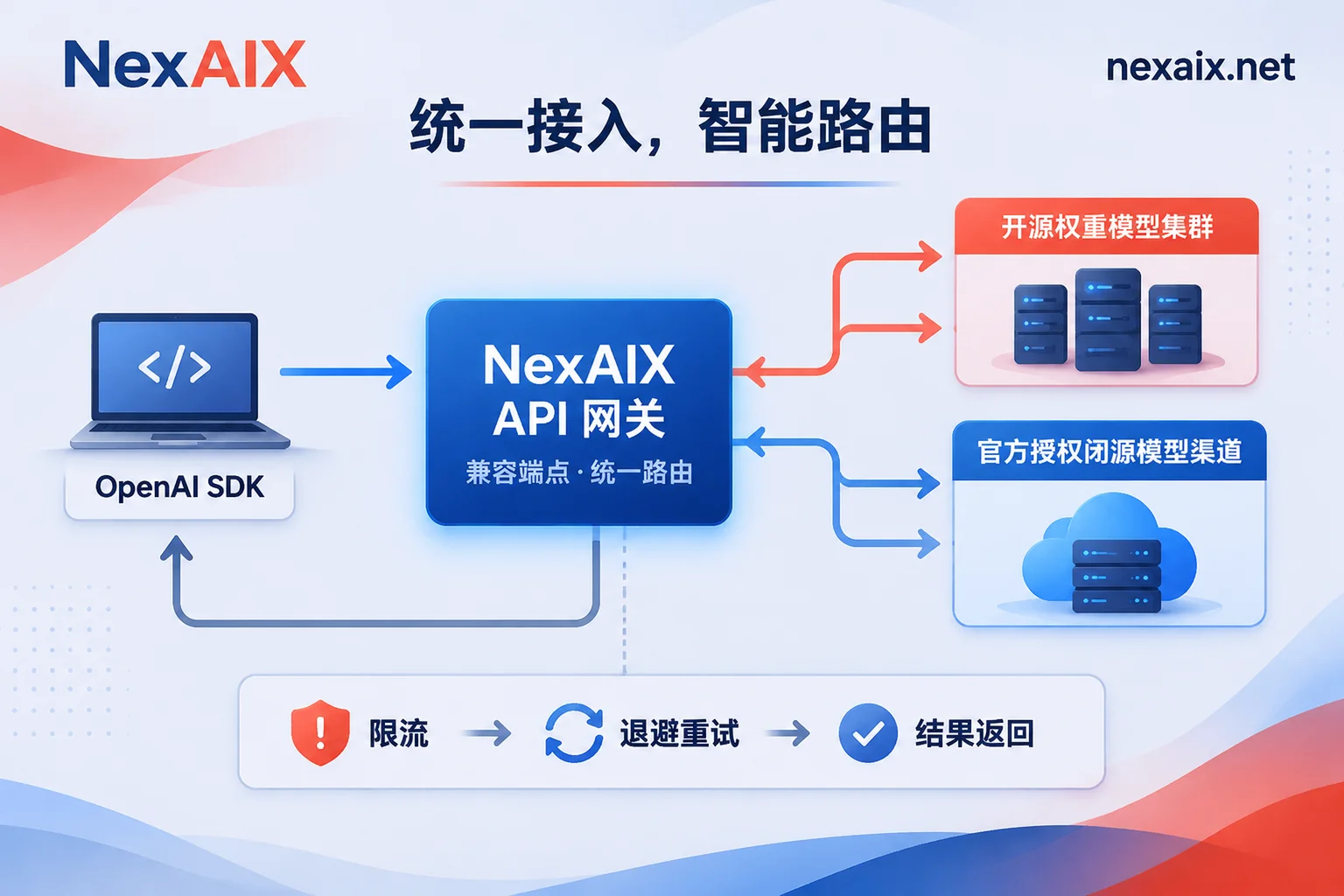
Most projects built on the OpenAI SDK do not need to be rebuilt from scratch. NexAIX provides a fully compatible OpenAI Chat Completions specification interface, supporting streaming output, function/tool calls, and multi-turn conversations. The core migration actions require only two steps:
- Point
base_urltohttps://api.nexaix.net/v1; - Replace it with your NexAIX API Key.
Whether it is LangChain, Dify, NextChat, or Cline, any client that supports a custom base_url can connect directly. More importantly, NexAIX enables "one Key to access all models"; switching models only requires changing the model field, completely eliminating the fragmentation burden of maintaining multiple codebases for different vendors' API protocols. For details, see NexAIX OpenAI-Compatible Access.
The "Reassurance" for Production Environments: No Downgrades, Auditable Transparency
The biggest concern when migrating APIs in production environments is "silent downgrades" or "tampered parameters." NexAIX promises:
- No downgrades: No swapping in smaller models, no context truncation, no hidden system prompts injected; parameters are passed through as-is. We provide users with four self-check methods, including fixed-prompt retesting, to ensure that the returned
modelfield is the model actually executed. - Data transparency: For teams with strict compliance requirements, NexAIX does not record conversation content during request processing and uses end-to-end TLS 1.3 encryption, ensuring data is not persisted outside memory.
Open Weights and Official Licensing: Two Clear Supply Boundaries
NexAIX clearly distinguishes model supply methods to help developers choose based on business needs:
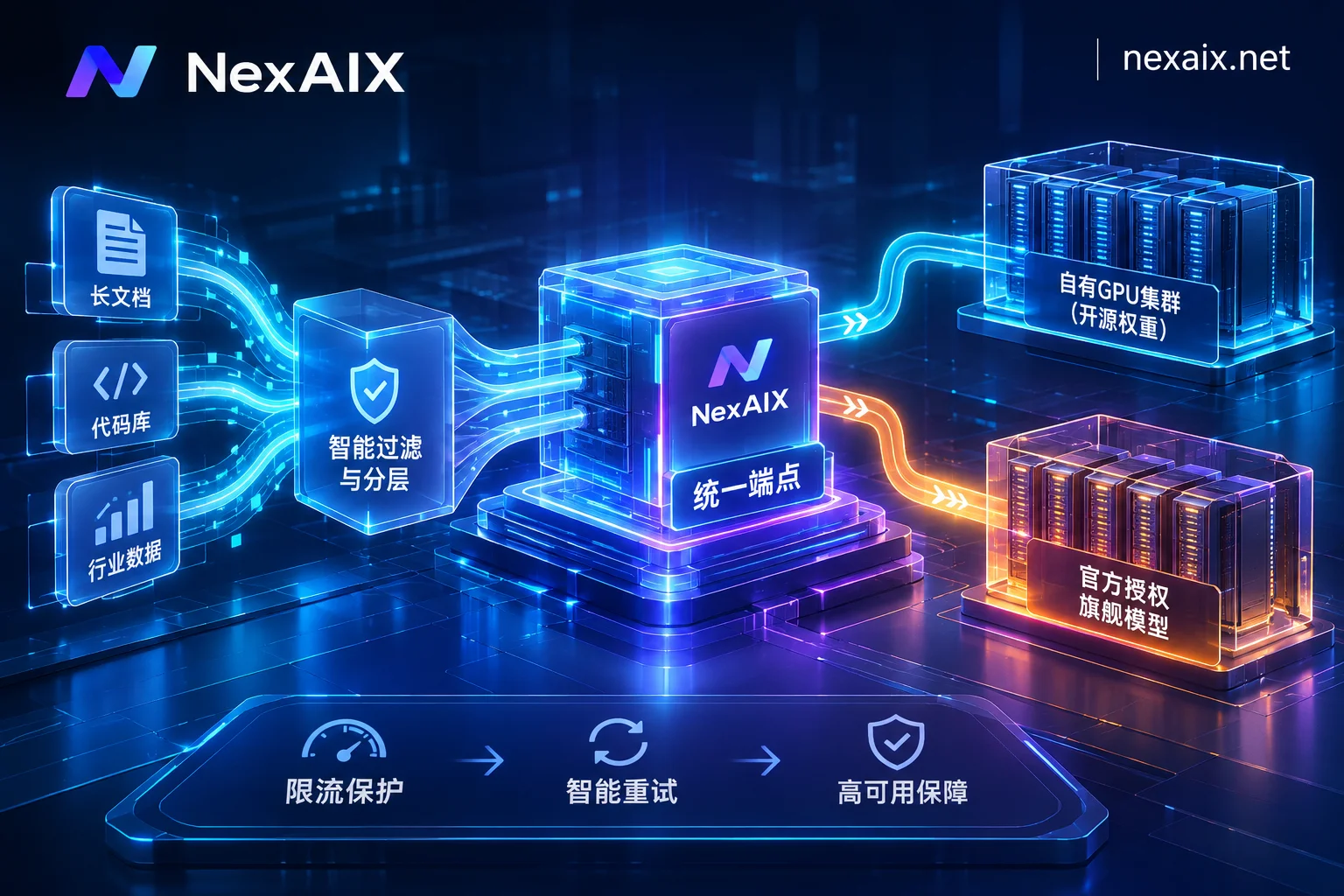
- Self-owned compute deployment (open weights): Self-built GPU cluster operations covering mainstream models such as Kimi, DeepSeek, and Qwen, with performance guaranteed by a high-precision inference engine.
- Official licensed channels (closed source): Through vendors' official commercial licenses, with contracts and auditability, meeting enterprises' compliance requirements for using models such as Claude.
You can consult the NexAIX Transparency Statement at any time to see how we define these two supply modes and avoid the instability risks brought by account pools or reverse-engineered interfaces.
Start Migration Testing Now
If you are looking for API infrastructure that is robust, controllable, and can quickly respond to changes in model selection, welcome to visit the NexAIX official website to register. You will receive testing credits upon registration; no enterprise qualifications are required, so you can quickly verify production environment compatibility.
For more practical insights on LLM API governance and pitfall avoidance, see these articles on our site: