 NexAIX-官方博客
When choosing an AI API aggregation platform, first look at two dimensions that can directly impact your bill and stability: whether the model field in the response matches the request, and whether it returns a standard 429 when at capacity instead of silently switching models. On August 19, 2026, OpenRouter announced its merger with Stripe, disclosing that it processes over 10T tokens daily from over 400 models and has a developer community of over 10 million people. This marks metering and financial governance as the evolution direction of the aggregation layer. For teams integrating multiple models, the value of an aggregation platform is not just multi-model relay, but managing cost, quota, and attribution clearly. This article compares by capability dimension to help you verify key differences before ordering.
How Do AI API Aggregation Platforms Differ from Official APIs in Billing?
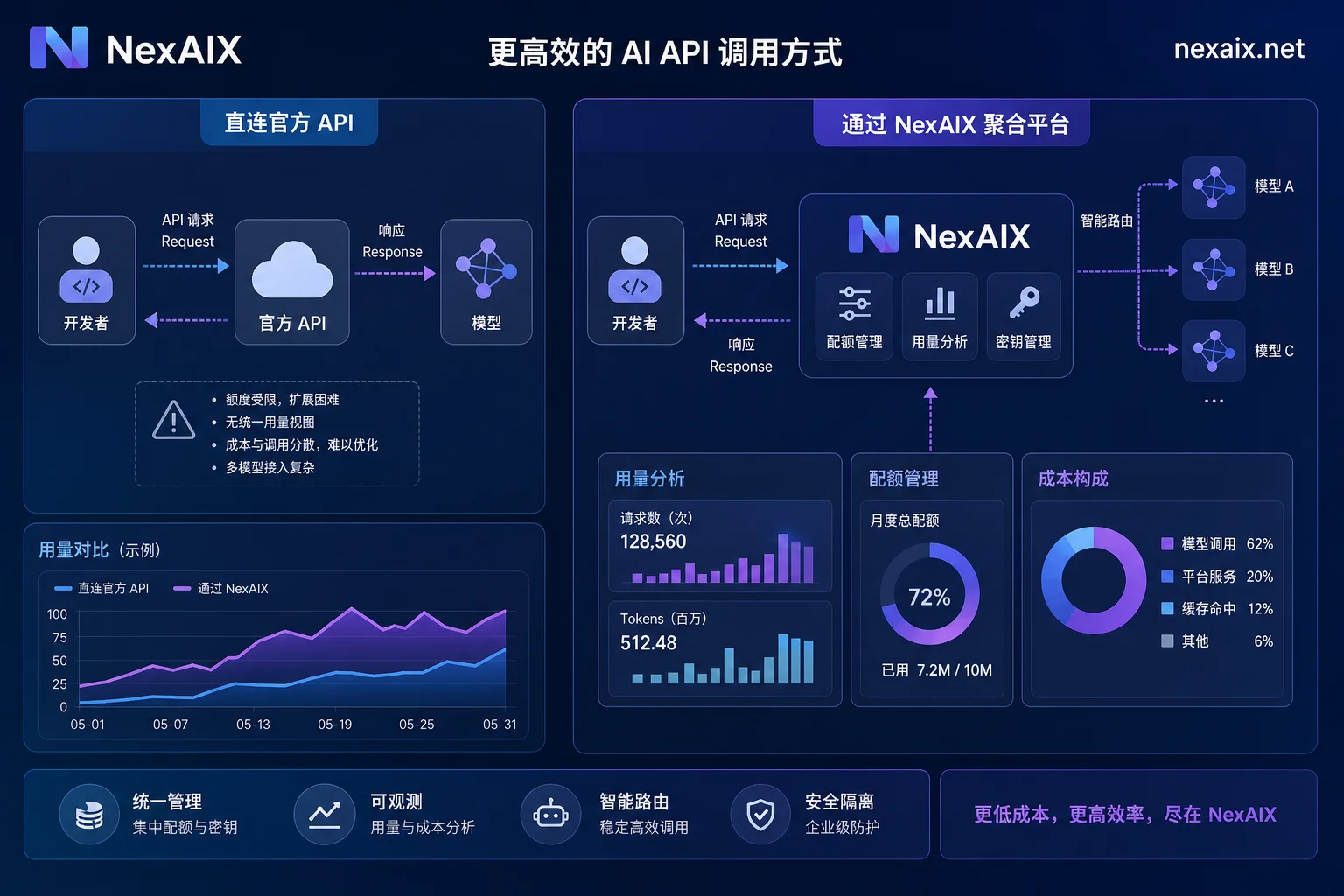
First, clarify the difference between AI API aggregation platforms and official APIs. In terms of integration cost, aggregation platforms provide a unified credential, saving the hassle of applying for and managing multiple keys; in terms of runtime cost, routing and retries may incur additional token consumption and latency; in terms of governance cost, the aggregation layer handles metering and financial responsibilities, providing unified usage views and quota controls. These capabilities are built on the extra hop architecture, so selection should be comprehensive.
How to Verify Model Identification
Many people care whether the aggregation platform uses official models. The verification point is whether the model field in the response truthfully reflects the actual executing model. Self-verification methods: specify a concrete version number in the request, not an alias; compare the model field in the response with the requested value; note whether alias pointers change during version updates; then do a horizontal comparison of output style and tokenizer segmentation with a fixed prompt, but note this can only be circumstantial evidence, not a conclusion. Use an SDK with only base_url changed to make a request and read the response fields. If you cannot self-test, you can only rely on contractual terms, such as whether the platform uses third-party inference engines or post-processing. When encountering such claims, ask for written documentation.
Compatibility Layer Depth of Protocol Compatibility
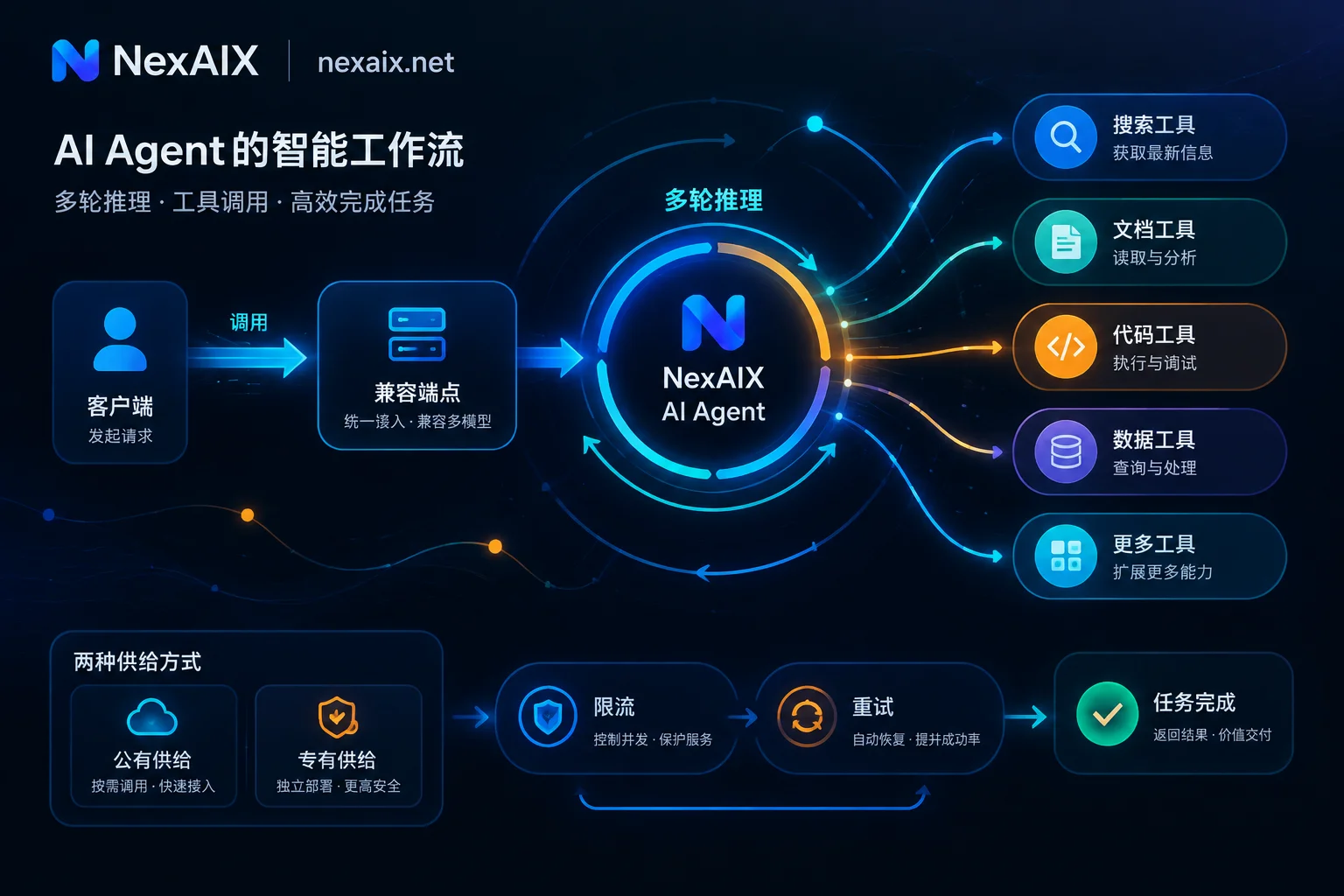
OpenAI compatibility is not a boolean but layered. Normal conversation working does not mean streaming incremental fields are complete; streaming working does not mean parallel tool_calls are passed through unchanged; in multi-turn history, whether thinking blocks and signature fields are trimmed also affects the stability of agent chains. Verification method: use the same code, only change base_url, and test three scenarios sequentially, checking: whether the delta field in streaming responses contains full content and tool_calls increments; in parallel tool calls, whether the tool_calls array in the response preserves each call's id, type, and function arguments; in multi-turn return, if thinking blocks or signature fields are trimmed, it may cause 400 errors or incoherent context in subsequent requests. Compatibility degradation often exposes itself in tool-calling chains; run it to find out.
Routing Control Rights and Quota Spending Limits
This is the key selection point. When multiple people share one key, how to allocate quotas? First, distinguish between "locked model" and "allow platform auto-selection." Auto-routing may cause parse failures in strict JSON Schema and long-step tool calls, so routing control must be manually disabled. For quotas, confirm whether the platform supports splitting RPM, TPM, and spending limits per sub-key or workspace; whether the spending limit is a hard block or just an alert; after reaching the limit, does it return a standard 429 or another status code? The table below lists items to confirm one by one: which can be self-tested and which require written terms. NexAIX is provided as a sample row for reference.
| Capability/Term | Standard Practice | Details to Confirm | NexAIX Sample Performance |
|---|---|---|---|
model field in response | Should match request | Alias pointer changes | Corresponds to actual executing model (self-testable) |
| Behavior at capacity | Standard 429 + retry advice | Whether silent degradation occurs | Returns 429, does not switch to cheaper model (self-testable) |
| Quota splitting | Per key/workspace | Supports RPM/TPM/spending split | Need written terms (see their docs and contract) |
| Spending limit | Hard block or alert | Status code after reaching limit | Need written terms (see their docs and contract) |
| OpenAI compatibility | Layered compatibility | Tool call transparency | Provides base_url https://api.nexaix.net/v1供验证 |
In the aggregation platforms you are evaluating, automatic routing has both benefits and risks; the core is that you control the routing switch. Take the two self-testable capabilities of NexAIX above and ask the vendor if they can be written into the contract or documentation.
Usage Attribution: Who Exhausted the Quota?
After Stripe acquired OpenRouter, workspace-level usage analysis is becoming the evolution direction of the aggregation layer. Teams should ask platforms to provide usage split by key, model, time window, and status code, as well as export details for secondary allocation. But rather than relying on post-hoc platform dashboards, it is better to add your own business tags on the call side and log request IDs and usage fields. This way, even if the platform's analysis dimensions are not fine-grained, you can locate which service or member exhausted the quota yourself. Each sub-key with independent usage reports, and checking by key when bills arrive, is more direct than guessing later. When multiple people share a key, the shared key limit may drag down critical business. At this point, confirm whether the enterprise AI API capacity guarantee is available—after all, a single business hitting the shared quota can leave other businesses without quota.
Data Retention Boundaries and Failure Traces
Data retention should be viewed in three categories: request body and model outputs, billing metadata (request ID, model name, token count, timestamp, status code), and debugging and security logs. The extra hop means retention policies must be confirmed separately with the upstream model provider and the aggregation layer, especially the retention period and anonymization of request bodies. If necessary, you can use zero-log verification to confirm whether the platform truly does not record request bodies. Failure observability is also important: at capacity, is it a standard 429 with retry advice, or silent degradation to a cheaper model? What traces do timeouts, rate limits, and degradations leave in the status page and response body? These can be directly verified with load testing.
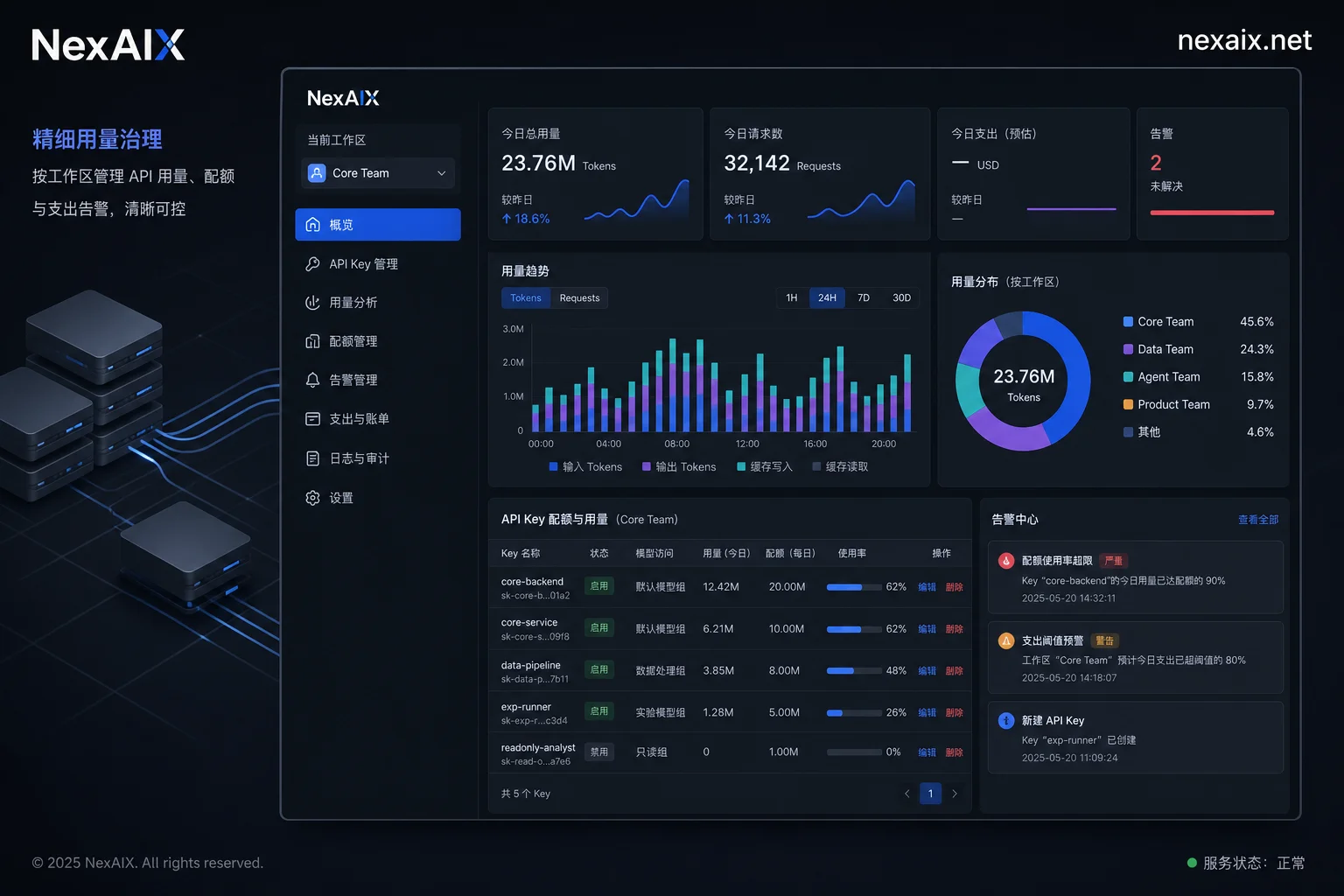
Migrating from a Single Shared Key to Workspace Quotas
To migrate to workspace quotas, follow these numbered steps to avoid risks:
- Split keys by business line, keep the old key running read-only for a period to observe traffic changes.
- Add business tags on the call side and log request IDs and usage fields to establish a baseline.
- Set a soft limit (alert threshold), run for a week to understand real usage distribution, then decide on hard block values.
- Adjust the limit to hard block and enable alerts and model fallback switches.
The most common problems during migration are: retry logic may amplify requests exponentially under rate limiting; and cached shared prefixes being split, reducing hit rates and increasing costs. So after switching keys, monitor these two metrics.
Long-Context Cost Calculation: Example with Kimi K3
Open-source models like Kimi K3 have expanded the context window to native 1 million tokens and adopted a single flat billing rate (no tiered pricing), offering new options for long-context needs. A low list price does not mean low total expenditure; actual spending depends on three variables: monthly call count (N), actual prompt tokens per call (T), and unit price (P, per million tokens in USD). When calculating, first compute the prompt tokens after cache deduction, then add retry consumption. Monthly cost = N × T' ÷ 1,000,000 × P, where T' is the reduced prompt tokens after cache; retry consumption is calculated as a percentage of the reduced base.
Assume your team has 100,000 calls per month, with an average of 50,000 prompt tokens per call (long-context may be higher), and the unit price is $2 per million tokens (for demonstration only, replace with actual contract price). If 60% of the prefix in requests can be cached and the cache hit rate is 70%, then the reduced prompt tokens per call T' = 50,000 × (1 - 0.6×0.7) = 29,000 tokens. Base monthly cost = 100,000 × 29,000 ÷ 1,000,000 × 2 = $5,800. If 5% of requests retry due to timeouts or rate limits, additional cost = 5,800 × 5% = $290, so final monthly spending = 5,800 + 290 = $6,090. The table below lists the variable relationships under this demonstration, for you to substitute your own data.
| Variable | Demonstration Value | Description |
|---|---|---|
| Monthly call count | 100,000 | Replace with actual |
| Prompt tokens per call | 50,000 | Long-context may be higher |
| Unit price ($/million tokens) | 2 | Demonstration, replace with contract price |
| Cacheable prefix ratio | 60% | Depends on actual request structure |
| Cache hit rate | 70% | Requires platform-observable metrics |
| Reduced prompt tokens per call | 29,000 | Considering cache deduction |
| Retry rate | 5% | Additional cost = base cost × retry rate |
| Base monthly cost | $5,800 | Calculated with reduced T |
| Additional retry cost | $290 | Calculated on reduced base |
| Final monthly spending with retries | $6,090 | Base cost + retry additional cost |
Note: These numbers are for demonstration; actual costs depend on your distribution. Failure condition: if there is no cacheable prefix, cache benefits are zero, and high first-token latency may cancel out price advantages, or even become more expensive due to retries. It is recommended to ask the platform for cache hit rate observability metrics; otherwise, you cannot calculate the true per-call cost.
Frequently Asked Questions
What is the difference between AI API aggregation platforms and official APIs?
The main difference lies in the governance capability of the extra hop: official APIs give you direct model access, while aggregation platforms additionally provide unified credentials, routing, usage analytics, and quota management. The trade-off is potential increased latency and link complexity. When selecting, focus on whether model identification is clear, quota control is a hard block, and usage attribution is fine-grained.
How to allocate quotas when multiple people share an API key?
Stop using a bare key. Split into sub-keys or workspaces, giving each business line independent RPM, TPM, and monthly spending limits. Confirm the platform supports per-dimension limits and can set hard blocks. If unsupported, implement rate limiting at your own gateway layer, but this increases cost.
How to know who exhausted the API quota?
Assign independent usage reports to each sub-key, split by key, model, time window, and status code. If platform dimensions are insufficient, tag requests on the call side, log request IDs and usage fields, and run SQL for attribution during billing. This quickly locates the specific service or member.
What are the methods to set spending limits on API keys?
In the platform console, find quota settings, choose monthly or daily limits, and enter the amount. Note the difference between hard block and alert: hard block directly returns 429, alert only sends notifications. It is recommended to set a conservative soft limit for a few days, then gradually lower to a hard block value.
Does the aggregation platform use official models?
Self-testable parts: request with a concrete version number instead of an alias, then compare the model field in the response; do a horizontal comparison of tokenizer and output style with fixed prompts (only circumstantial). Parts that rely on terms: whether the platform uses third-party inference engines or post-processing. These require written commitment from the vendor; don't trust verbal "guarantees."
How to split costs when multiple teams share the same key?
For small teams, keeping one key and tagging requests at the call side for cost splitting can work, but post-hoc reconciliation often takes extra time. When multiple business lines have stable call volumes, splitting sub-keys by team is a more reliable allocation method; if unsupported, use gateway-level rate limiting and increase SQL attribution.
Before finalizing a platform, run the same OpenAI SDK code with only the base URL changed, execute requests with a specified version number, and verify the model field in the response, the status code under rate limiting, and the usage format, before deciding to switch production traffic.



Comments(0)