 NexAIX-官方博客
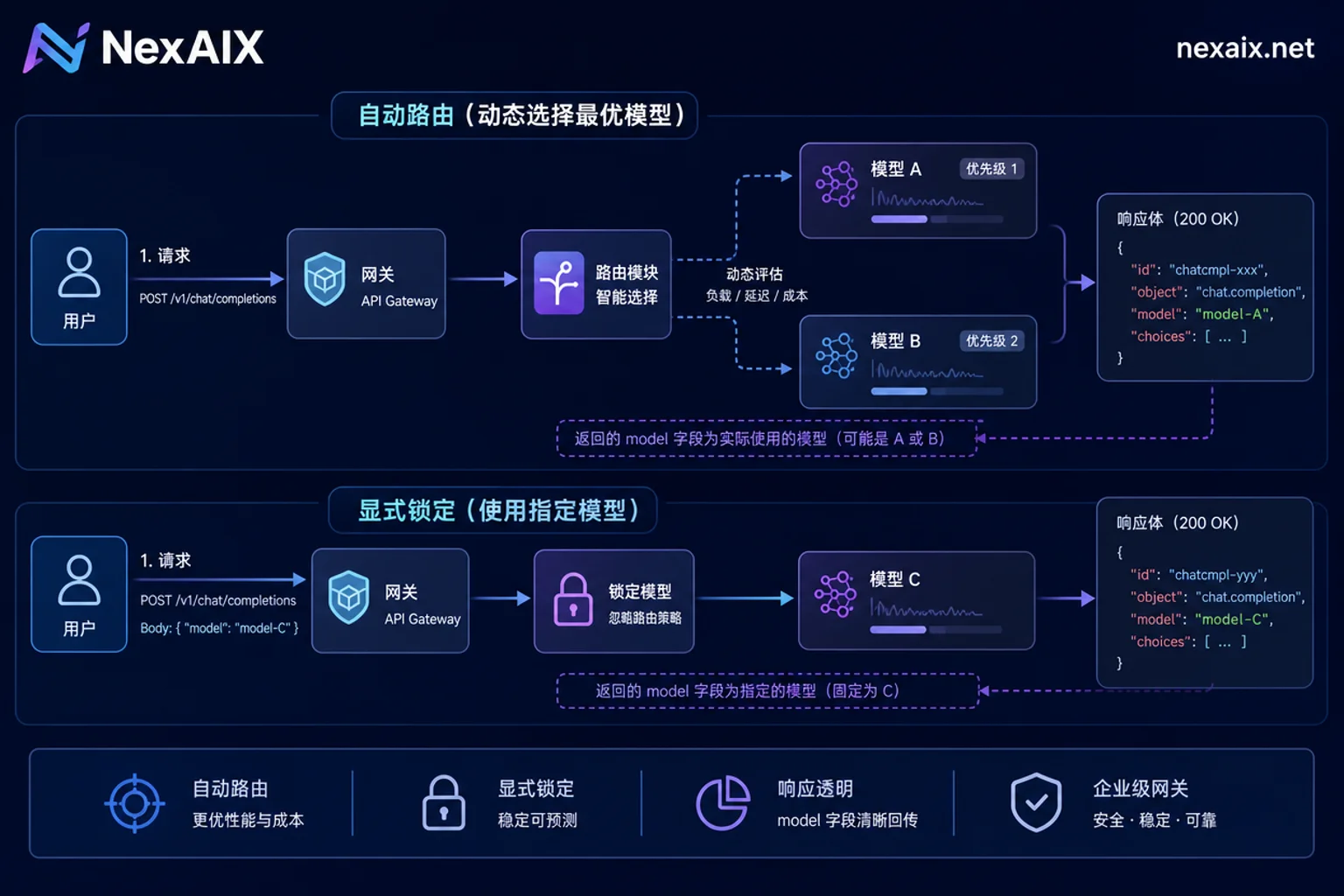
When selecting AI APIs, the recommendation is to decide as follows: weakly constrained free-text flows can allow auto-routing, while strongly schema-constrained and multi-step tool-call flows must explicitly lock the model. This conclusion became more important in August 2026—OpenRouter launched the Wisdom of the Market-driven Auto Router on August 10, replacing static classifiers with aggregated platform-wide call distributions, returning the actual model in the response's model field, and introducing an Analytics API for usage attribution. The following six criteria form an executable AI API selection checklist: output determinism, structural stability, cost caps, reproducible eval, fault attribution, and compliance audit.
First, Distinguish Two Things: Who Gets Model Selection Authority, and Where the Request Actually Runs
When doing AI API selection, first distinguish two concepts: auto-routing (model name changes) versus provider-side load balancing (different instances of the same model). The former changes output distribution and tool-call protocols, and is the core of this discussion; the latter is just scheduling of the same model on different machines and does not change output characteristics. The entry point for determination is simple: check the model field in the response. If it varies under the same request scenario, auto-routing is at play; if it remains stable and only the underlying instances change, your business logic is unaffected. For differences in gateway-side disaster recovery and scheduling, refer to the breakdown in Multi-Model API Gateway.
Criterion 1: Output Determinism—Can Business Tolerate Cross-Model Drift for the Same Prompt?
The first criterion is a quantifiable drift test. Fix a set of prompts and sampling parameters (temperature, top_p, etc.), repeat requests N times, and calculate the consistency rate of key fields. Thresholds should be set according to business failure costs—write-to-database or externally disclosed flows typically require close to 100%, while internal draft generation can be more lenient; the values cited in this article are placeholders, not industry benchmarks. If the consistency rate falls below the business threshold, the determinism loss from auto-routing is unacceptable. Evaluations from LLMRouter/xRouteBench indicate that dynamic cross-model switching leads to reduced determinism in strongly structured outputs. This is a structural phenomenon, not an occasional failure. For scenarios requiring strict consistency, such as finance and healthcare, locking the model is recommended.
Criterion 2: Multi-Model Routing Causing Unstable JSON—Why Structured Outputs Degrade First
In Agent workflows, different underlying models show structural differences in JSON Schema strict mode support, tool-call protocols, and parameter adherence. Silent cross-model switching easily triggers downstream parser crashes, a classic issue summarized in community practice. Multi-model routing experiments from LangChain and NeMo Switchyard (engineering records from 2026-06) show that tool binding and parameter schema adherence depend on precise underlying model support; silent cross-model switching causes downstream semantic parsing failures. If your flow relies on strict JSON output or tool binding, the uncertainty introduced by auto-routing is the biggest risk. Track two metrics: parse failure rate (ratio of JSON syntax errors) and tool parameter validation failure rate (ratio of incorrect or missing parameters). Once these metrics rise noticeably after enabling routing, immediately roll back to locked models.
Criterion 3: Cost Predictability—Under Auto-Routing, Estimate Ceiling, Not Average
Regarding the question of whether auto-routing costs can be estimated, the answer is: only the ceiling can be estimated; do not rely on average savings. The cost ceiling estimation formula is: highest unit price among candidate models × request volume + resend overhead due to retries and parse failures. For example, if routing might hit multiple models from cheap to expensive, use the most expensive model's unit price as the ceiling budget, and include additional requests caused by parse failures in cost. Do not be fooled by advertised cost saving percentages; actual spend depends on dynamic hit distribution and retry frequency. Engineering experience shows that cost estimates should always be based on the worst case.
Criterion 4: Eval Results Not Reproducible After Model Switch—Locked Model Is Prerequisite for Comparative Evaluation
Non-reproducible eval results after model switching is a common pain point. The reason is that offline regression eval requires fixed model names, fixed parameters, and fixed datasets to attribute metric changes to model or prompt modifications. If auto-routing is allowed into the evaluation process, you cannot tell whether metric fluctuation comes from routing switches or code changes. The correct order is: first run a reproducible baseline under a locked model, then gradually enable routing for A/B comparison. Only then can you confidently say a certain optimization is effective. Note that even after enabling routing, periodically rerun the baseline to ensure the routing strategy hasn't silently degraded quality. For evaluation criteria after model migration, refer to OpenAI-Compatible API Model Migration.
Criterion 5: Fault Attribution—Can You Locate the Specific Model and Provider When Issues Arise?
When production quality degrades or parse errors occur, you need to trace back to the specific model and provider. This requires complete logging of request IDs, actual executed model, status codes, retry counts, and so on. If auto-routing does not provide this information, faults become irreproducible mysteries. OpenRouter's Analytics API is designed for this, but not all gateways offer data at the same granularity. During AI API selection, treat "ability to track the actual executed model per request" as a hard requirement. If these fields are missing, switch immediately to locked models until observability is complete.
Criterion 6: Compliance and Audit—The model Field in Responses and Usage Logs Must Reconcile
From an audit perspective, the model field in responses must correspond to the actual executed model, and usage records must align with billing. Otherwise, financial audits and compliance reviews face reconciliation risks. Use two baselines for verification—whether the model field corresponds to the actual executed model, and whether standard 429 responses are returned under full load rather than silent model switching; NexAIX's public service scope follows this, and readers can use test credits to lock a single model, send dozens of requests, and compare whether the model field and usage logs match one-to-one. For further investigation, refer to How to Detect Water in AI Relay Stations.
Routing Rules: Which Flows to Auto-Route, Which Must Lock Explicitly
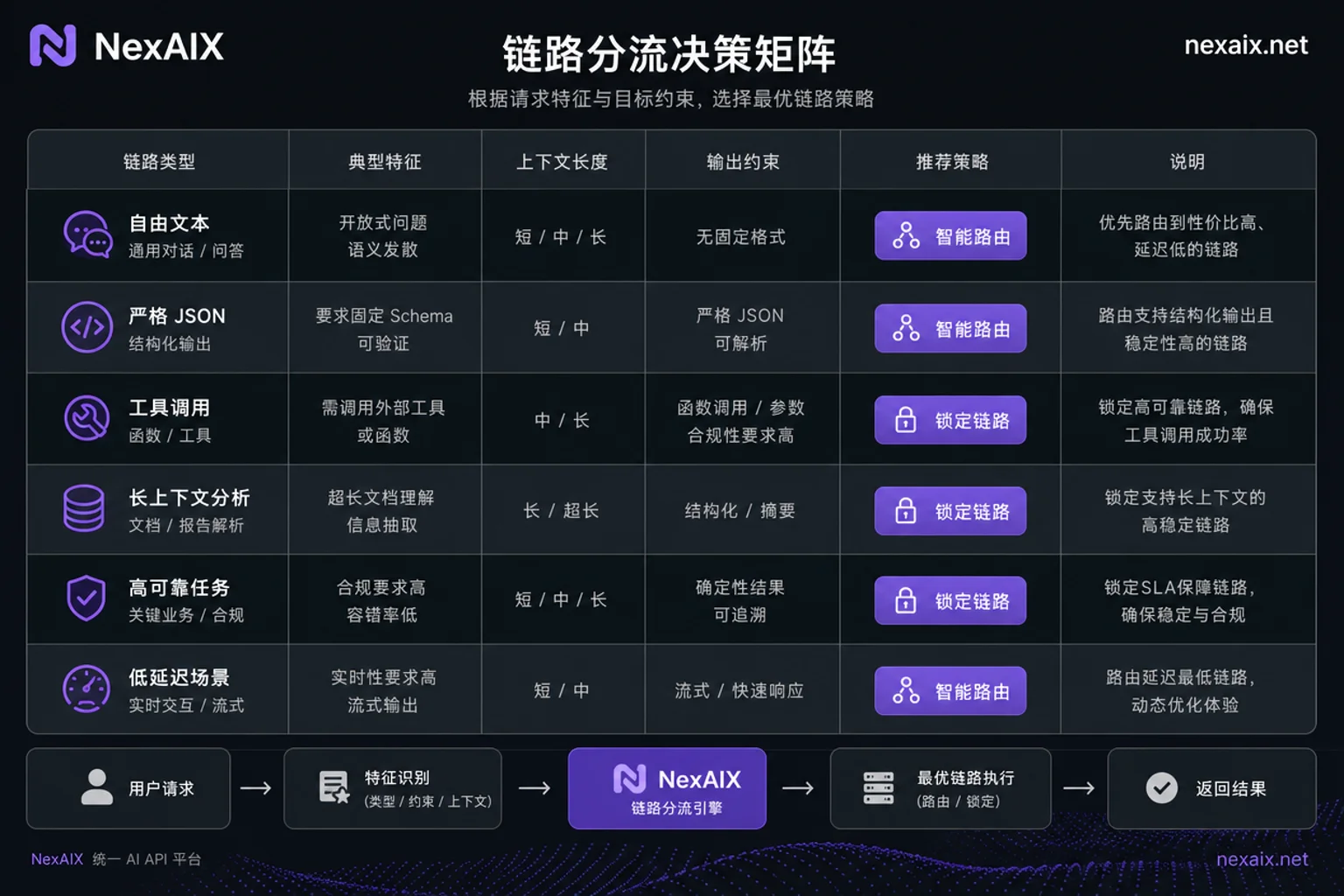
The following routing decision table helps you quickly judge and align team understanding during AI API selection.
| Flow Type | Output Form | Failure Cost | Recommended Strategy |
|---|---|---|---|
| Free-text dialogue | Unstructured | Low (slight drift acceptable) | Enable auto-routing |
| Strict JSON output | Strong schema | High (parse crashes) | Explicitly lock model |
| Multi-step tool calls | Structured + tool binding | High (semantic failures) | Explicitly lock model |
| Data ingestion/writes | Strict format | High (data contamination) | Explicitly lock model |
| Compliance-audited flows | Any | Medium (needs traceability) | Explicitly lock model |
| Low-cost exploration flows | Non-critical | Low | Enable auto-routing |
Note that a hybrid strategy is feasible: within the same application, different flows can adopt different strategies. For example, enable routing for user-facing chit-chat, but lock the model for Agent tool-call flows.
Rollback Checklist: Regression Items When Switching from Auto-Routing Back to Locked Models
If you decide to roll back from auto-routing to a locked model, follow this checklist to avoid omissions.
- [ ]
modelfield verification: Confirm the responsemodelis the locked model with no silent switching - [ ] Schema parse pass rate: Re-test JSON parse success rate, should return to baseline
- [ ] Tool-call parameter validation: Verify tool parameter formats and required fields meet expectations
- [ ] Long-context truncation behavior: Check if truncation strategy is consistent for long inputs
- [ ] 429 and retry behavior: Confirm standard 429 is returned under full load, triggering reasonable retries; if rate limits persist after rollback, see AI API 429 Error Troubleshooting
- [ ] Cost reconciliation: Verify usage logs against billing invoices to ensure unit prices match the locked model
- [ ] Eval baseline rerun: Rerun offline evaluation on the same dataset and compare with historical baselines
Only after completing these regression items can you confidently say the rollback is safe.
Frequently Asked Questions
Will Auto-Routing Silently Switch Models?
Auto-routing may indeed switch models between requests, but it typically returns the actual executed model in the response via the model field. If the model field in responses is inconsistent with your requested model name for an extended period and the documentation does not explain the routing strategy, first fix the model in a test environment for re-testing, then decide whether to entrust that flow to the gateway.
How Do I Know Which Model the Gateway Actually Calls?
The most direct method is to check the model field in the response. A stricter approach is to log the model, token count, and timestamp for each request at the gateway or proxy layer to form an audit log. If the gateway provides an Analytics API (like OpenRouter's), use it for usage attribution analysis. Without this data, you cannot answer "which model was actually used."
Should Agent Tool Calls Fix the Model?
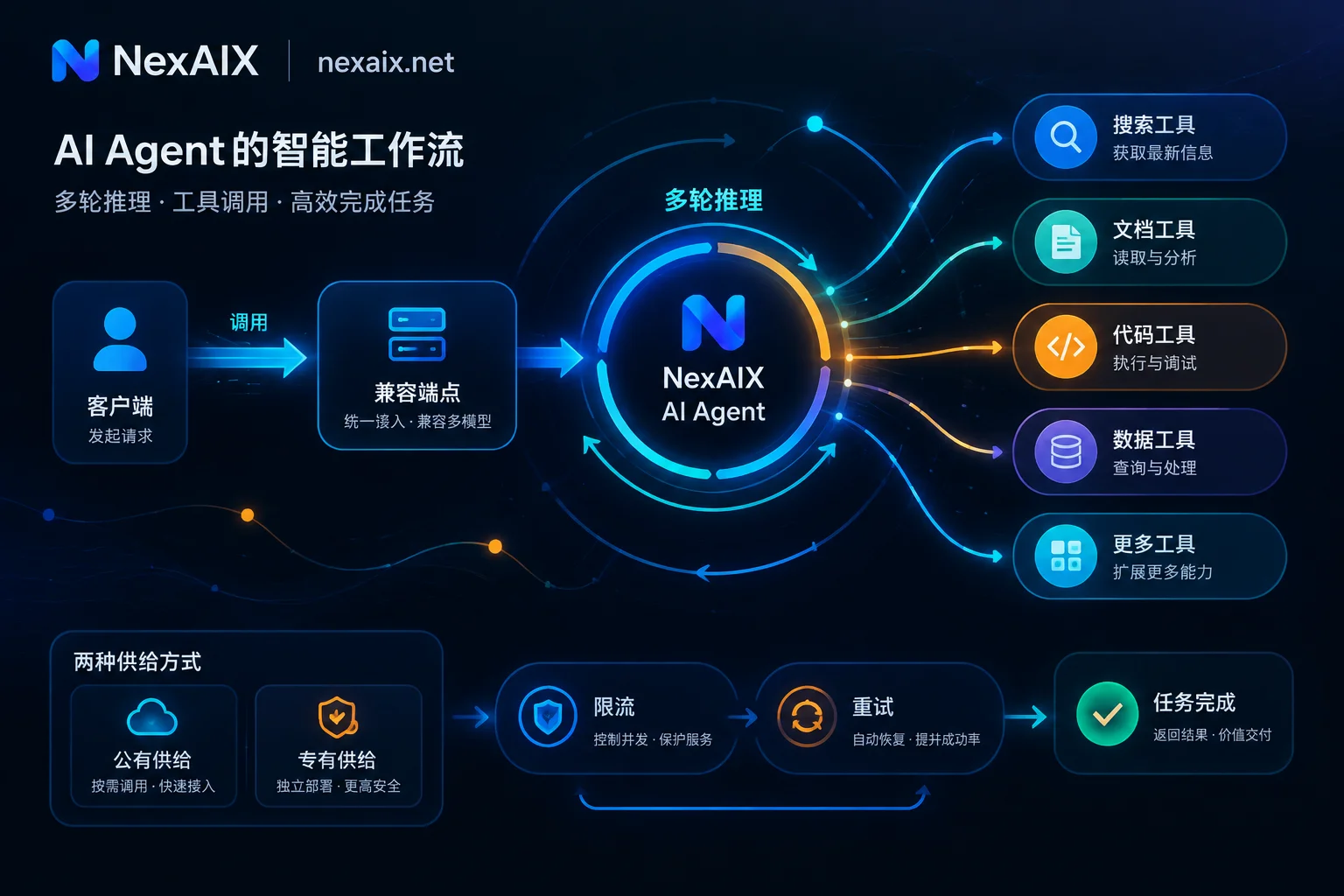
Yes, fixing is recommended. Because tool calls depend on the underlying model's precise adherence to tool schemas and instructions, cross-model switching easily causes parameter format errors or protocol incompatibilities, leading to downstream parsing crashes. In a complex Agent workflow, the failure cost of tool calls is usually high; fixing the model ensures behavioral consistency and aids troubleshooting and evaluation.
Can Auto-Routing Costs Be Estimated?
Only the ceiling can be estimated; do not rely on average savings. In the first two weeks of launch, cap the budget at the highest candidate model unit price, use gateway usage attribution data to measure actual hit distribution, and after two weeks, converge the budget to the P95 hit price.
How to Stop the Bleeding from Unstable JSON?
If JSON parse failure rates rise, the most direct stopgap is to explicitly lock the model name, then re-test parse success rates. Also check whether the gateway supports strict schema mode and ensure tool parameter validation has fallback logic. After solving stability issues under the locked model, consider whether and how to reintroduce auto-routing.



Comments(0)